Selected work 05
THE LAST PIANO
About the work
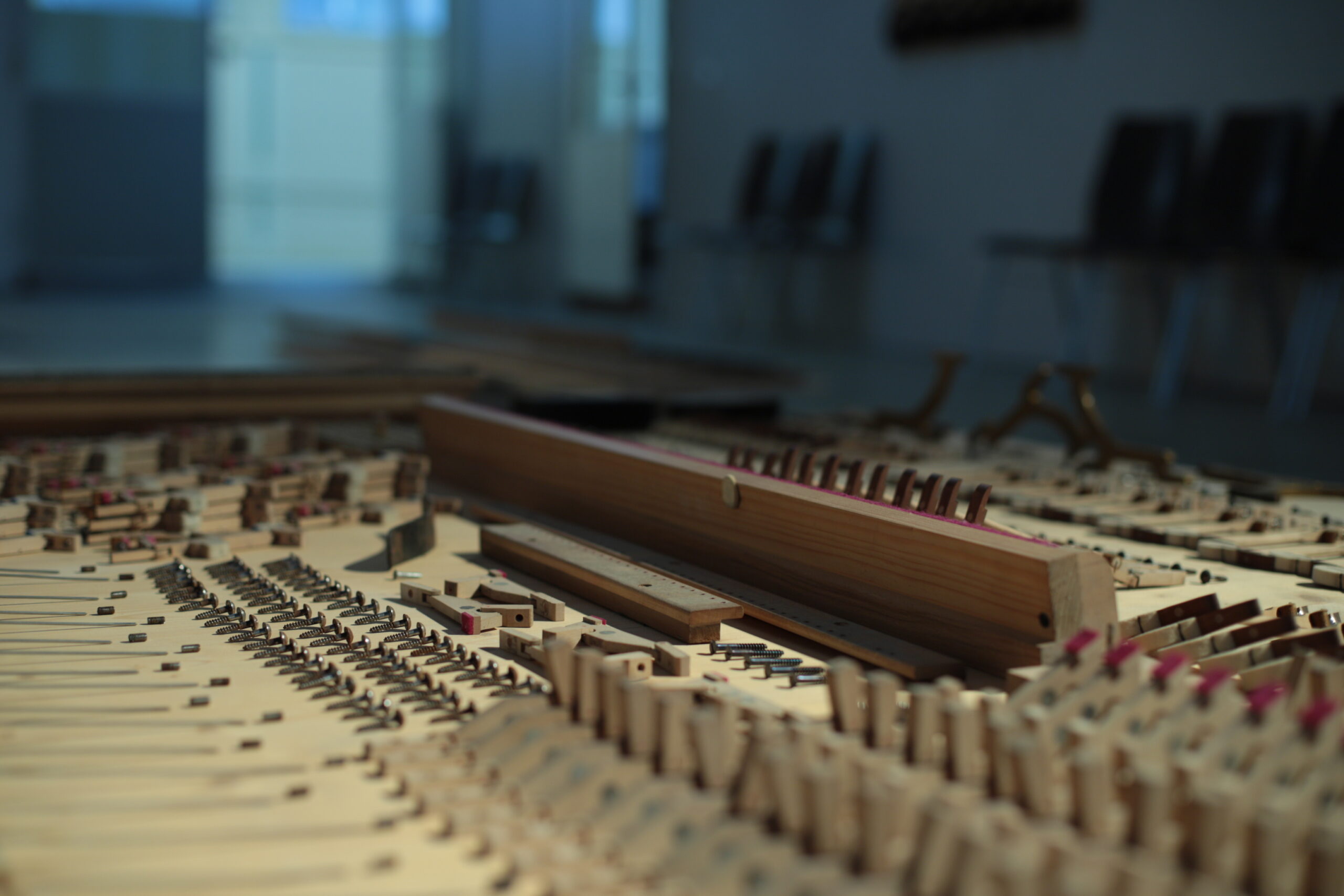
THE LAST PIANO is a work complex centred on a 1935 concert grand piano by Anton Proksch. It offers an unconventional homage by dividing the piano into a series of artworks that explore the transdisciplinary processes of archiving and digitisation. The project proposes an alternative form of preservation while reflecting critically on archiving and technological progress, in the tension between appreciation and accessibility on one side, and innovation and tradition on the other.
The archive, and the archived object, become a walk-in space. The individual works invite viewers to engage with the piano through all their senses: auditorily, visually, tactilely and interactively. At the core is an expansive installation of the piano’s dismantled components, accompanied by an immersive soundscape composed of the recorded sounds of its deconstruction. Video installations, projections, print-based works and an interactive audio-tactile piece complement the ensemble.
I.
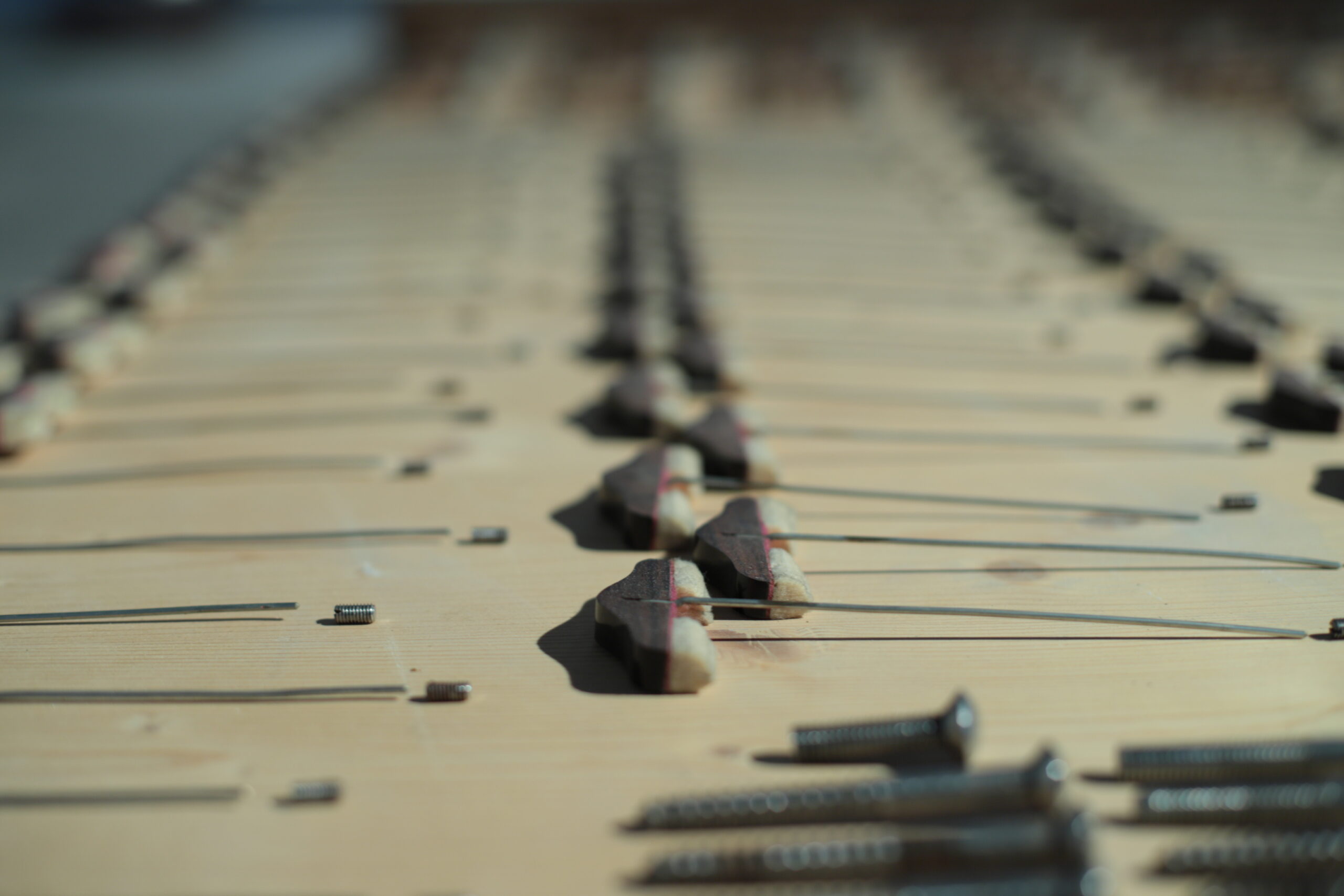
1502
1502 sets the stage for the piano. Its individual components, carefully categorised and arranged, form a spacious, room-filling installation. The work places full emphasis on the visual aesthetics of this handcrafted instrument: the finely sculpted scrolls, ornamental details, meticulous craftsmanship and the distinctive hue of the wood. Reconfigured as a spatial installation, the grand piano takes on a new visual and sculptural language.
II.
Decomposing 04:33 h
A 4 hour and 33 minute audio piece capturing the disassembly of the grand piano, recorded with nine microphones: six room microphones, two directional microphones and one contact microphone. The soundscape transcends the linearity of time and action and unfolds as a meditative, repetitive listening experience.
The disassembly was approached with care and calm, never through force; glued components were left intact. What remains are the intimate sounds of screwdrivers, moving parts and vibrating strings, and the artist’s own presence: breath, footsteps, hand movements. Experienced through 60 wireless headphones or distributed speakers, the work creates a shared space of listening, reflection and archiving.
III.
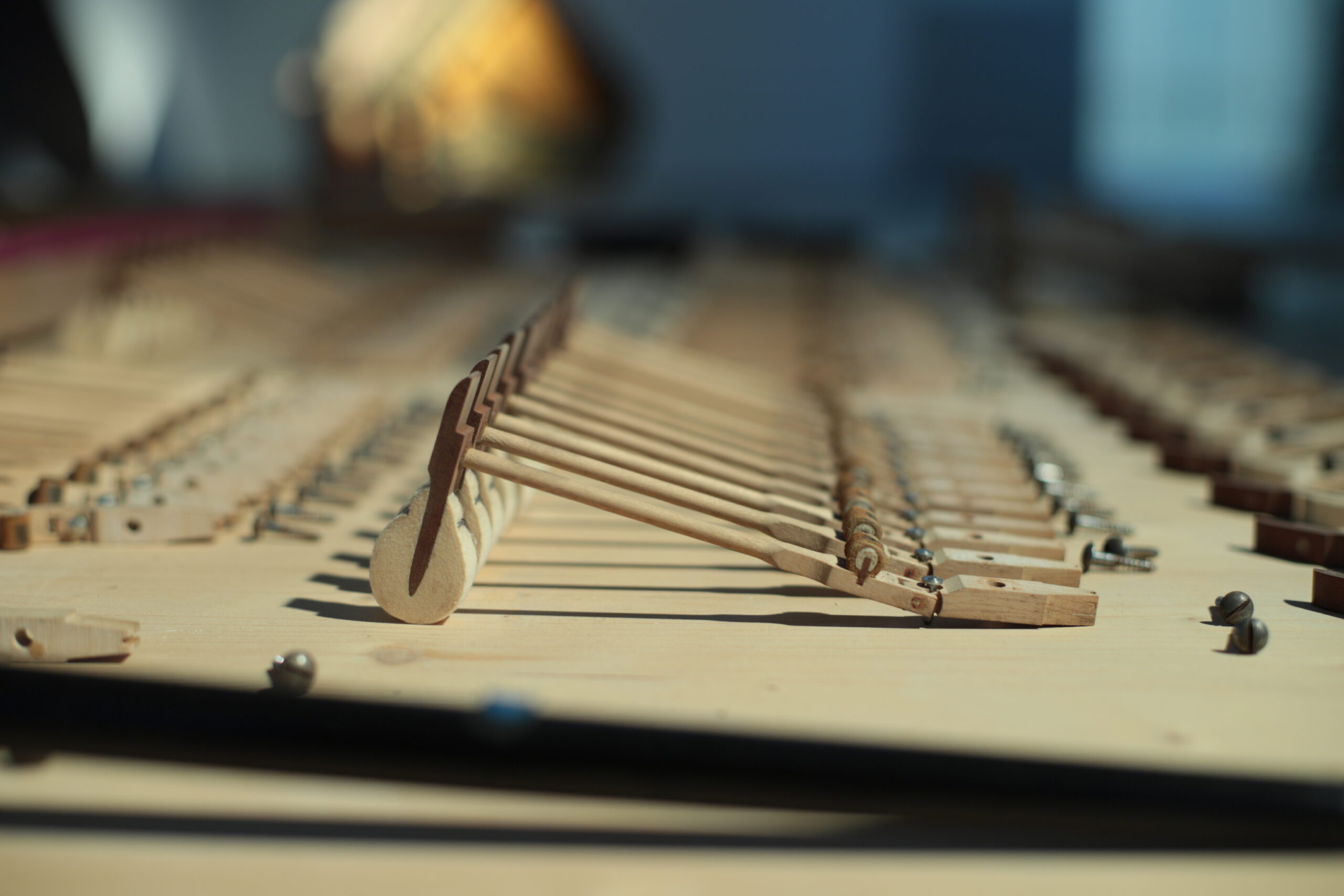
Human Music
Human Music presents music not as composition, but as sound generated through direct human touch. Depending on the intensity of physical contact between two people, different notes of the concert grand are triggered, while MIDI automation shifts octaves over time so that the instrument’s entire tonal range unfolds. The sampled piano sound also serves the archive, preserving the instrument’s acoustic character digitally.
Credits
Solo exhibitions, 2023: Franz-Fischer-Straße 4, Innsbruck, AT; Palais Mamming Museum, Meran, IT (2023 to 2024).